Monday, January 7, 2013

New Mystery revealed in The Mansfield Killings

It was the worse two-week killing spree in Ohio’s history. On the night of July 21, 1948, Robert Daniels and John West entered John and Nolena Niebel’s house in Mansfield, Ohio with loaded guns. They forced the family including the Niebel’s 21-year-old daughter, Phyllis, into their car and drove them to a cornfield just off Fleming Falls Road in Mansfield. The two men instructed the Niebels to remove all of their clothing, and then Robert Daniels shot each of them in the head.

Scott Fields of Mansfield, Ohio was so intrigued by this true story that he turned the horrific events into a page-burning novel that you cannot put down until you turn the last page. During a recent book signing in his hometown of Mansfield, Scott was approached by a man he had never seen before. The man introduced himself and Scott's jaw dropped.

By Scott Fields
Author of The Mansfield Killings
I had just begun a book signing when a dignified, older man walked through the door. He stood in the back of the room as I finished with the person in front of me. He then approached me and shook my hand introducing himself as Roger Winger. I had no clue as to who he was in spite of his obvious pause as he waited for me to take heed of his presence.

Roger Winger and Scott Fields
“You don’t know who I am, do you?” he asked.

“No, I don’t,” I said. “Sorry.”

“In July of 1948, I saw the dead bodies of the Neibel family lying in a cornfield off of Flemming Falls Road.”

For several seconds I stood there with mouth open trying to comprehend what he had just told me.

 “What did you just say?”

“I actually saw the dead bodies.”

I grabbed him by the arm and led him into another room.

 “How could you have seen such a thing?”

“I was six years old at the time. I lived next to the cornfield where the Niebels were found. That day was like any other summer day. I had seen the group of boy scouts marching down Flemming Falls Road earlier in the day. I hardly gave notice because boy scouts on that road was a common sight to see. Later that day, I stepped outside my house to see find police cars, ambulances and even fire engines all up and down the road. Out of curiosity, I walked down to the cornfield. There were men rushing back and forth but seemed to be concentrating on a spot about 50 feet into the field. I cautiously walked through the corn stalks until I was within a foot or so from the spot where the three people had been shot.”

“Did you see the bodies?” I asked.

“Yes, I did. Their bodies had turned white and were extremely bloated.”

“Was there signs of blood?”

“No. I don’t remember seeing any blood.”

The Mansfield Killings Cover II“That’s a bit surprising,” I said. “Considering that they were shot in the head. What happened next?”

“One of the policemen saw me and yelled at me to get the hell out of here. I took off running thinking they were chasing me.”

“Daniels declared that they did not rape twenty year old Phyllis, and yet the bodies were found completely nude. The first coroner stated that there was no evidence of rape and yet the coroner at Daniel’s trial stated that she had been raped. Why do you think Daniels would admit to everything but deny raping Phyllis?”

“I’m not sure,” said Roger. “I personally think he did it. Back in those days, murder was one thing. Rape was another.”

Small talk followed, and soon we said our goodbyes. I did manage to get his phone number and address, because I have many more questions for him.
_______________________________________

The Mansfield Killings now at this special publisher's discount price of $12.99 (List $14.99).

Publication Date: December 3, 2012
Discount Price: $12.99
5.5" x 8.5"
Black & White on Cream paper
280 pages
ISBN 10 - 0982993137
ISBN 13 – 978-0-9829931-3-2
Binding Type: US Trade Paper
Language: English

Tuesday, September 6, 2011

Am I Crazy or What? Or how social media and YOU can bring a book to life

Guest blogger and author Mary L. Tabor shares her book marketing techniques

By Mary L. Tabor
Mary L. TaborSo you wanna get published, right? So you think only a big house can get you anywhere worth getting, right? So, you think you need an agent first thing, right?

I thought all these things and have the credentials to prove that I’ve been on a literary journey: English major, Phi Beta Kappa, teacher, professor, MFA degree, literary journal editor, literary prize winner. But no big house and no agent.

Instead, I did what some may think is crazy. I went with a product development company that dabbled in publishing. But my book got out. And I went to work. I have an active public Facebook page that is linked to my Twitter account, a website always under revision as new stuff happens and I write a blog where I try to post at least once a week.

Today’s post that you are reading would have been this essay. But this site begged for it and it’s theirs. But later you may see this post on my blog. Go check out this: How to buy a dress and end up with a book party.

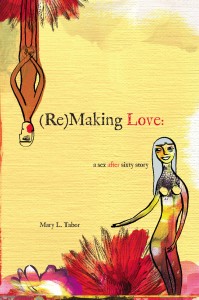
(Re)MAKING LOVE: a sex after sixty storyI don’t tweet about my memoir (Re)Making Love: a sex after sixty story much, though some. I don’t blog about my book much, but some: actually, I blogged the book while I lived it—that’s the first crazy-some-say thing I did before the product development company found me—and that accounts for the banner of a blog that deals not with erotica but with literary thought, interviews and essays on writing and books.

Now you’d think a book with this sordid, unconventional history wouldn’t be doing very well, right? And, indeed, I’m not getting rich. But is that what we artists are really about? Okay, a girl could hope but that’s never been the goal: The work will out.

But get this: The small print in the visual for the book from Amazon says, #7 top rated in the Kindle store for Non-Fiction, Biographies & Memoirs, Arts &literature, Authors.

The week before it was #5 behind The Diary of Anne Frank and Steven King’s On Writing.
And guess what: The book party at Upstairs on 7th (aka: “How to buy a dress and get a book party”) resulted in the promise of another book party by one of the women who came.

Then I went to dinner with a banker-friend I know and told him what happened. He called his wife and is planning another book party in another dress shop and he’ll be providing the wine.

Is there a moral? Ain’t no good here at morals. But I will say this: If you put your heart and soul into your book and you’ve edited it like crazy with a cool eye, had others eyeball it and critique it, then find a reputable publisher and work—yes that means you—to sell one book at a time. Because like the memoir I wrote, it’s all personal.

PS: Another piece of good news: A new and much more experienced indie publisher has taken my memoir. Be sure to check out the second edition (more edits and a prologue) now from Outer Banks Publishing Group.
Mary L Tabor, author of (Re)MAKING LOVE: a sex after sixty story


(Re)MAKING LOVE: a sex after sixty story, second edition, is available on Amazon, the Kindle, Barnes & Noble, the Nook, iBook, Sony ereader, the Outer Banks Publishing Group Bookstore and in other electronic formats from Smashwords.com.

Wednesday, June 22, 2011

The Man Who Fooled SAVAK is about love and never giving up

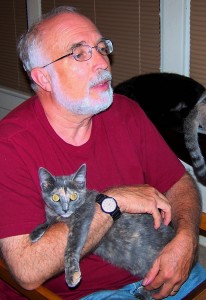
Doug Roberts with one of his cats
When I read Doug Roberts' book, The Man Who Fooled SAVAK, it was one of those stories that completely engrossed me where I couldn't put it down until it was finished.

Inspired by true events in the early 1970s, The Man Who Fooled SAVAK captures what it is like to live in a dictatorship with secret police monitoring your every move – an atmosphere of fear that still pervades today in many countries in the Middle East.

What makes Doug's book so appealing is that what he wrote today about events 40 years ago is still going on today in many parts of the Middle East. And all of these events are carefully woven into a love story that will make you fall in love all over again.

Here is an interview with Doug about how he came about to write The Man Who Fooled SAVAK after 40 years.

Q. The release of your book coincides rather well with Arab Spring. When did you start writing it?

A. In the summer of 2008. A woman I’d met on line named Erica Murray was interested in Iran so I started writing to her about it. I started doing some very preliminary research into the history and politics of Iran in 1971 in order to refresh my memory of things I had experienced when I was in Iran during that time. The book was completely finished several months before the uprising in Tunisia.

Q. Even though that was 40 years ago, there are many common elements with what is happening across the Arab world.

A. Yes, especially the fear people experience when living under an autocratic regime is something I hope I have captured, and as the book proceeds, the breaking out of that fear. Perhaps it will give people hope. Just like in my book, the methods used by various dictatorial regimes to maintain control seem to be taken from a common playbook: trample a free and independent press, keep the people fooled, use an iron fist to silence dissent, eliminate fair trials, use torture to extract confessions - the list goes on and on.

Q. But when you wrote the book, you weren’t thinking about that.

A. (laughs) True! I don’t have a crystal ball and the Arab Spring was as big a surprise to me as the rest of the world.

Q. Can I ask you about one of the characters in your book? Was there really a Junior?

A. Yes there was. I think Junior made the story possible to write. We really did sell our liquor and cigarette rations to him. I recently learned from a fellow who served in ARMISH/MAAG just before I arrived that Junior mostly dealt with the domestic workers, the Iranian nationals who worked at the bachelor quarters where we lived.

Q. I’d like to ask you about another character, Mihan Jazani. She is a historical figure, the wife of the Bijan Jazani who founded one of Iran’s guerilla movements. It appears that she’s a friend of yours on Facebook.
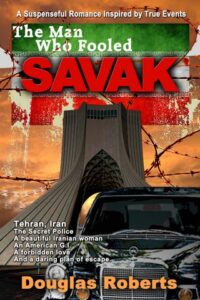
Cover for The Man Who Fooled SAVAK
The Man Who Fooled SAVAK
A. (Blushes) Um, well yes…so it would appear. (laughs) Actually, Mihan Jazani doesn’t like Facebook and never uses it. The Facebook account was set up for Mihan by her granddaughter, Aida. Aida and I exchange messages occasionally.

Q. How were you able to remember so much about what happened then? It was 40 years ago after all.

A. I was assisted in several ways. I had some writings I had done about Iran when I was in journalism school at Kent State in 1972. I had a large number of slides that I’d taken when I was there. Those were crucial in reviving old memories. A huge help was finding a 1977 map of Tehran on the (now defunct) Tehran American School website. I was able to use the exact names of places, even street names. The fellow I’d mentioned earlier who told me about Junior had sent me a copy of the ARMISH/MAAG directory, which was very useful. Finally, talking to people I worked with at that time was extremely important, namely Heidi Eftekhar and Barry Silver, who are characters in the story. I obviously couldn’t remember all events specifically, but I found I could generate them as needed by being very specific in my language. I would take seeds of ideas and extrapolate and grow them into full blown events. For example, a certain lecherous officer really did say to Heidi, “I think you’re a woman who needs a lot of loving.” I took that and ran with it. Last, but also important, the Internet was a valuable tool in researching the historical incidents in the book.

Q. So, where does the novel part come in?

A. Some of the human rights related events are novelized, but they’re very accurate in their portrayal of the times. I’ll leave historians to figure all that out. They will have their work cut out for them because I’ve spent a lot of effort weaving the story line into the history of those days.

Q. How close is your character Doug Roberts to the way you actually are?

A. That’s a really good question. (laughs) I had originally intended that Doug the character would be an extreme version of myself. But after having read my book now over and over, I’ve come to see that what’s extreme are the circumstances he’s in. Doug the character is a lot like I was back then: ok in the smarts department, and a little too cocky sometimes. He’s not very romantic or knowledgeable about women, but does all right in spite of himself. (laughs) There’s an element of male fantasy in the book I suppose. In the story, I have two charming female lunch companions in addition to Fari my Iranian girlfriend/fiancée.

Q. But you really were friends with Heidi Eftekhar your co-worker in the story.

A. I still am. Heidi and I communicate regularly by email and her input on the book was immensely helpful. Miss Farou is the fantasy. She actually didn’t like me all that much. (laughs).

Q. I get the impression you had a lot of fun writing your book.

A. It was pretty trippy for me at times. I would totally submerse myself in it. For example, I had written the scene describing how I spent New Year’s Eve in Iran just a couple of weeks after New Year’s Eve in real life. When someone asked me about how I’d spent my New Years, it shocked me as to how much effort I had to put into pulling up what I’d actually done versus what I’d just written. That was a little scary.

Q. What do you think people will get out of your book?

A. I’m sure everyone will get a little something different, but what I’d like for people to take from it is that, like in the story, life may present you with some extreme circumstances. When that happens, keep a level head and your wits about you. Try to see beyond what appears to be happening on the surface. There will always be some good things happening at any given moment. Try to focus on that. To get through your ordeal it’s a good idea to engage all your friends to help you and your faith if you have that. Most important of all: never give up.

The Man Who Fooled SAVAK is available as an ebook on Amazon Kindle and in various ereader formats from Smashwords.com

Tuesday, December 28, 2010

Guest blogger talks about determining a setting in your novel

Bestselling Novelist Karen Dionne talks about how she chose the setting for her newest novel, Boiling Point.

Editor's Note: If you are inspired, awe struck or just emotional about a particular place consider using it as a setting in a novel. A place with such emotional ties adds a rich element to the story.
Karen Dionne is the internationally published author of Freezing Point, a science thriller nominated by RT Book Reviews as Best First Mystery of 2008. 

A second environmental thriller, Boiling Point, about an erupting volcano, a missing researcher, and a radical scheme to end global warming is forthcoming from Berkley in January 2011.

Karen is cofounder of the online writers community Backspace, and organizes the Backspace Writers Conferences held in New York City every year. She is a member of Sisters in Crime, Mystery Writers of America, and the International Thriller Writers, where she currently serves on the board of directors as Vice President, Technology. 

She is also Managing Editor of the International Thriller Writers' newsletter and webzine, The Big Thrill.

My new environmental thriller, Boiling Point, is about an erupting volcano, a missing researcher, and a radical scheme to end global warming involving geo-engineering. The story takes place during the time of a real volcanic eruption: Chaitén volcano, in Northern Patagonia, Chile.

Chaitén Volcano came to life for the first time in 9,000 years on May 2, 2008 in a major eruption. The magma blasted 3.1 miles through Earth’s crust in only four hours, giving the people living in the town at the base of the volcano six miles away just 30 hours’ warning. The volcanic plume climbed 12 miles into the stratosphere, covering much of Patagonia with ash and drifting as far east as the Atlantic. 

No one lost their life, but ten days later, heavy winter rains washed the ash that covered the ruined mountains into the river, creating a lahar that caused the banks of the Rio Blanco to overflow and destroying 90% of the town.

Because my publisher bought Boiling Point before it was written, I was able to travel to Chaitén volcano one year after the initial eruption for onsite research. I stayed in Chaiten town, even though the town was still evacuated and without electricity and running water, and hiked to within one mile of the new lava dome, where I saw steam vents, heard explosions coming from the caldera, and felt a small earthquake. It was an amazing and inspiring trip that definitely informs the novel!

I chose Chaitén as the location for Boiling Point after I saw this amazing picture of the initial eruption that was making the rounds of the Internet:

 As I wrote the chapters leading up to the moment of eruption, was really looking forward to describing that amazing plume:

"A colossal pillar of ash and gas spewed from Chaitén’s caldera. Molten rock colored the column red as it streaked for the stratosphere, turning the sky around it a sickly yellow. Plumes of steam erupted from the surrounding rocks, cheering the inferno heavenward like hissing demons."

Boiling Point follows several characters’ stories until they all converge at the volcano at the end, and so not long after, I had the chance to describe the plume again from another character’s point of view:

"To the east, the massive pillar of ash stretched into the night. It roiled and pulsed like a living thing, lit from within by great sheets of orange and red flame like a Hollywood explosion that just kept going. Flickering around it and through it were brilliant bolts of lightning, dancing and chasing each other, lighting up the whole plume and the layers of cloud above and below with purple. A terrifying construct of fire and lightning and smoke. A vile, elemental monster, looming over his town, threatening to rain down flame and thunder. Heart-stopping. Terrifying. Like something born of the perverse imagination of a disaster movie director. This wasn’t something that happened in real life. And yet there it was, right in front of him, and Gabriel was watching it with his own eyes."

And not long after that, again:

"And then there was the volcano. At the edge of the caldera, wisps of steamlike mist. Beyond, a smoking hump—a newborn lava dome, barely visible in the shifting ribbons that curled up around it. A brand-new mountain where none had been a day ago. It smoked and shuddered, and even from this distance they could hear it pop and rumble as boulders tumbled down its slopes. The tendrils of steam that spewed from its sides rose up to meet the main column, a vast nightmare tower of churning ash and steam. It rose up into the heavens and mixed with the clouds until Ross couldn’t tell where the volcano’s plume ended and the sky began, spreading its umbrella over the world and raining down ash. Ash that was falling on them."

– and again:

"An angry black column of ash and debris filled the sky, writhing and roiling like something alive, so big, she felt like an ant contemplating the smoke from a roaring campfire. Like the lone survivor of an atomic blast."

–  and again    

"At last, the caldera. She craned her neck as she drove through a passage that was eerily similar to the one she’d entered from the other side barely twenty-four hours ago. Towering walls guarding a narrow entrance, the gates of Hell. Inside, a world of fire, steam, and smoke. Staggering in its immensity and power. Elemental. She could feel Chaitén’s vibrations thrumming through the floorboards. See the rocks crumbling off the cliff faces as she drove between them. Smell the sulfurous odor belching from the bowels of the Earth. Hear the mountain roar. The vast expanse of rocky ground was split apart, riddled with cracks oozing new rock, spurting steam. And in the middle, a hill of red rock that was already the size of a small mountain, vomiting a roiling tower of ash and gas from the center of the Earth, darkening the skies and raining down cinders and ash: the newborn lava dome. Dante’s Inferno."

– again and again and again. I’ll admit, by the time the last character saw the volcanic plume for the first time, it was becoming a real challenge to find a fresh way to describe what was essentially exactly the same thing.

Don’t get me wrong: Boiling Point was a lot of fun to write. After all, the novel has a 40-page climax that takes place IN the caldera of an erupting volcano – it doesn’t get more exciting than that! But having the bulk of the story take place immediately following Chaitén’s eruption created another descriptive challenge, as the following video illustrates:


(Chaitén volcano, Northern Patagonia, Chile. Video by Karen Dionne. To see more photos and video of my research trip to Chaitén volcano, visit www.karendionne.net)

 My next novel, I’m choosing a more colorful setting!

To read an excerpt from Boiling Point, click here.

Friday, November 26, 2010

A Time to Reflect, a Time to be Grateful


As Winter nears, the days shorten and the air gets colder, I begin to think how lucky most of are with all that we have or will have. I also think of those who don't have and it makes me even more grateful of not only the things I have, but also what's most important - friends, family and the love and passions in my life.

While we all get consumed in the trimmings of this Thanksgiving, try to take pause and look around at all that you have to be grateful. It could be a warm house with the cozy smells of a turkey feast; the smile and laughter of a child; the love of a cherished person. Then think about all those who don't have what you have and be thankful.

Here are a few quotes you may want to live by this Thanksgiving or for the rest of your life:

John Fitzgerald Kennedy
As we express our gratitude, we must never forget that the highest appreciation is not to utter words, but to live by them.

Melody Beattie
Gratitude unlocks the fullness of life. It turns what we have into enough, and more. It turns denial into acceptance, chaos to order, confusion to clarity. It can turn a meal into a feast, a house into a home, a stranger into a friend. Gratitude makes sense of our past, brings peace for today, and creates a vision for tomorrow.

William Faulkner
Gratitude is a quality similar to electricity: it must be produced and discharged and used up in order to exist at all.

Albert Schweitzer
To educate yourself for the feeling of gratitude means to take nothing for granted, but to always seek out and value the kind that will stand behind the action. Nothing that is done for you is a matter of course. Everything originates in a will for the good, which is directed at you. Train yourself never to put off the word or action for the expression of gratitude...

Galatians 6:9
Do not get tired of doing what is good. Don't get discouraged and give up, for we will reap a harvest of blessing at the appropriate time...

Anne Frank
I do not think of all the misery, but of the glory that remains. Go outside into the fields, nature and the sun, go out and seek happiness in yourself and in God. Think of the beauty that again and again discharges itself within and without you and be happy.


Tuesday, November 16, 2010

Want to publish your manuscript as an ebook - try Pubit


It seems there is only one formidable opponent competing on level ground with Amazon's Kindle and that is Barnes & Noble.

With the launch of their new ebook self-publishing venture, Pubit, in early October, the book store giant is finally on equally footing with Amazon.

Pubit was the last puzzle piece in the new paradigm of publishing that Barnes & Noble needed to take on Amazon with equal word power. (excuse the pun)

Both companies have control of the entire ebook publishing process from obtaining manuscripts to marketing, sales and distribution.
Here are the similarities:

Both companies have a huge inventory of books.
Both have years of experience selling books.
Both have comparable ebook readers with similar features and now both have self-publishing ventures. (Pubit and Kindle)

And the war is on. Check these other similarities between the two competitors as they try to one up each other.

Amazon pays its Kindle authors 70% of the list price if the price is $2.99 or more.
B&N pays its Pubit authors 65% of the list price if the price is between $2.99 and $9.99.

It is free to upload and publish your manuscript as an ebook on both Amazon and on Pubit.

Both companies have free, downloadable apps that will allow their ebooks to be read on other devices such as the iPad, iPhone, Android, PC and other mobile devices.

B&N claims they have more than 2 million NOOKbook titles.
Amazon claims to have more than 725,000 Kindle titles.

Amazon lowered its Kindle price to $189 last year.
B&N lowered its NOOK price to $149.

Amazon produced a next generation Kindle that is thinner, has longer battery life and a crisper screen in a cool graphite shell.
B&N recently introduced a full color model in a graphite body with a full touchscreen.

So what's next?

More great ebook devices and apps at great prices and lower book prices.

Who will win? No one knows. Maybe both will.

For authors undecided about publishing on the Kindle or the NOOK, well, pick one or pick both. You will win either way. Both companies have an equally strong market share and different market segments.

After all, think of how boring life would be if there were only one car company, one computer company, one pizza shop, and only one big ebook retailer.


Enhanced by Zemanta

Monday, September 20, 2010

Community Comes Together for a Little Girl in Need

Michael O'Brien called me about the  Barnes Street Open Horse Shoe Tournament next Saturday, Sept. 25 and said the organization plans to donate all proceeds to the Isabela Rainey Fund to help the family with their medical expenses.

The tournament, held for the past 16 years to help individuals and charities, will be held at the Barnes Street beach access in Nags Head, NC from noon until 4 pm on Sept. 25.

Show you spirit and your horse shoe skill by entering the tournament. Your $20 donation will go in its entirety to the Rainey family. If you are eliminated, you can still be a winner by entering again with another donation. And Isabela Rainey and her family will also be winners with your generosity.
If you want to learn more call 252 202-2149. They will be glad to hear from you.

And if you are not the horse shoe playing type, you can donate directly to the Isabella Rainey Fund online at the Outer Banks Relief Foundation. Be sure to note Isabella Rainey under "Donation in honor of" or you can mail a check to Outer Banks Relief Foundation, Inc., in care of Gateway Bank, P.O. 506, Nags Head, NC 27959. Make sure to put Isabella Rainey Fund on your check.

Saturday, September 18, 2010

I Need Your Help

UPDATE: One of the first benefit events for Isabela Rainey was held yesterday, Sept. 7 at Mexicali Brewz Cantina on the Beach Road in Kill Devil Hills.

The event featured a pig pickin' and music by local bands along with corn hole games for the kids.

Here are some photos from the event.


__________________________________________________

I need your help.

Isabela Rainey, 13
Isabela Rainey, my good friend Gordon Rainey's daughter, suffered a brain aneurysm and is fighting for her life.

She is only 13 years old.

The family needs your help. Isabela has been in a coma since July 31 when she was flown to Children's Hospital of the Kings Daughters in Norfolk, VA.

A part of her skull had to be removed to relieve brain swelling and she has undergone brain surgery. She will need therapy afterward to relearn everything all over again, according to Gordon.

"She is trying so hard to live. I am amazed at her strength and determination," said Janet Rainey, Isabela's mother.

Please donate. Any amount would help and all monies go directly to the family for current and future medical bills.

You can donate to the Isabella Rainey Fund online at the Outer Banks Relief Foundation. Be sure to note Isabella Rainey under "Donation in honor of" or you can mail a check to Outer Banks Relief Foundation, Inc., in care of Gateway Bank, P.O. 506, Nags Head, NC 27959. Make sure to put Isabella Rainey Fund on the check.

Any amount would be greatly appreciated.

Sunday, July 18, 2010

Do You Write Like Stephen King?

I recently discovered a cool site called I Write Like, which analyzes your writing and determines who your write like. Facebook has a similar application called, What Kind of Writer are You?

Paste a few paragraphs of your writing from your blog, a novel, or website into I Write Like, click "analyze" and instantly it says you write like Stephen King or Ernest Hemingway or Cory Doctorow.

I usually don't put much faith in the accuracy of such gimmicky sites, but I put in two different passages from my novel, Dark End of the Spectrum, and both times it said I write like Cory Doctorow. Strangely, I never read anything by Cory Doctorow.

The Associated Press reported that the site was created by Dmitry Chestnykh, a 27-year-old Russian, who modeled the site after software for e-mail spam filters and uploaded works by about 50 authors. He never expected the sudden success and plans to improve the site's accuracy by including more books.

In any event, I wouldn't contact a literary agent or publisher and tell them you write like the author from I Write Like.


I write like
Cory Doctorow
I Write Like by Mémoires, Mac journal software. Analyze your writing!

Photo by Mark Lenihan, The Associated Press

Tuesday, July 6, 2010

Dark End of the Spectrum is a Kindle Bestseller

Dark End of the Spectrum reached the number 2 bestseller on the Kindle this past weekend. It is currently number 4.

I would like to thank all of you who purchased a copy at 79 cents and I hope you had a great July 4th!
Enhanced by Zemanta

Monday, May 3, 2010

How to Sell Your Book Using Social Networking

Now that you have written and published your book, the hardest part is selling it. With more than 400,000 titles published in 2008, and now the explosion of ebooks, your marketing efforts have to be extraordinary even if you believe you have written a bestseller.

Image representing Google as depicted in Crunc...Whether you are self-published or published by a traditional house, you will have to market, promote and sell your book. With print book sales declining, and ebook sales exploding, traditional publishers are forced to rely on the authors to promote and sell their books. They no longer have the unlimited marketing budgets of the past.

I know many authors both self-published and traditionally published who are working equally hard to sell their books. It's a tough market, but here are some ways to improve the odds.

  • Get Connected with Social Media – Create a Facebook, MySpace, Linkedin page, open a Twitter account, join any NING social networks related to your interests and book. Sign up to networking sites like Meetup.com, Classmates.com or InsideAreaCodes.com. Register with social bookmarking sites like Stumbleupon.com, Delicious.com or Digg.com. 
  • Register as an author on the online book sharing sites like Goodreads.com, Scribd.com, weRead.com and Shelfari. Visitors see your book, may purchase it and post a review on these sites.
  • Use your book cover as your avatar or personal photo. The book cover consistently reminds others you are published author. It may peak their curiosity enough to investigate your book and maybe purchase it.
  • Work the social network sites consistently. After you have chosen the sites best suited to your interests and your book subject, you must participate on the sites for social networking to work. It is like you are running on a treadmill and the treadmill is connected to a generator keeping the lights on in your house. As long as you are running, the lights stay on and you keep building that Internet buzz about your book. When you slow down, the lights dim and the buzz is not so intense. When you stop completely, the buzz disappears.
  • Put aside about a half hour of time each morning and each evening to participate on the social networking sites. Make comments, post announcements, send tweets, and respond to other's posts and blogs. You don't necessarily have to make your submissions related to your book. You can talk about anything as long as you're a doing something online where others see you and your book. Leave a link back to your book or web site on any post or comment and make sure you say something interesting to attract visitors to your website or blog.
  • Create a blog and leave comments on blogs similar in subject matter to your book. Blogger.com and Wordpress.com are the two most used free blog hosting services. Blogger is best for the beginner blogger because it is very easy to use and doesn't contain a lot of bells and whistles used by programmers. Wordpress is the more advanced blog for users who know more about web page design and creation. Either site will work for the beginner or advanced user.
  • Search for blogs that are similar in subject matter of your book or interests. Technorati and Google Blog Search are good search engines for finding related blogs.
  • Join forums about your subject matter and participate. Use the various search engines to find forums related to your book. I find forums get a lot of traffic and when you post a discussion, you usually get instant results.
  • Create contests and giveaways on your blog or website. Goodreads manages a book giveaway contest. All you have to do is determine how many books you want to give away and which countries you want contestants. Goodreads randomly chooses the winners for you and all you have to do is send them a book.
Reblog this post [with Zemanta]

Thursday, March 4, 2010

How does an unknown author become a Kindle bestseller? Perseverance


I asked novelist Elisa Lorello to share some of her insight in how her first novel, Faking It, peaked to number 6 on the Kindle Bestseller list during the last week of January with her second book, Ordinary World, positioning well around number 40.

By Elisa Lorello
I wish I could give you a formula for my recent success as an Amazon Kindle bestseller. I've been going back, trying to re-trace my steps, and the best I can say is that all the pieces fell into place at the right time. I can, however, give you the pieces. They're the four Ps of marketing: product, price, place, and promotion.

Product

I had written my novel, Faking It, from 2004 to 2006. I spent much of 2007 querying literary agents, and while each query resulted in rejection, some agents requested the manuscript and gave me feedback that prompted me to revise the novel further. In late 2008, I decided to independently publish through Lulu.com. Despite the rejection from agents, I believed in my novel, believed in its quality and appeal, and believed a readership existed, waiting for it. Approximately six months later, in June 2009, I published it on the Amazon Kindle.

But I also have to talk about the Kindle itself as a product. My sales numbers began to skyrocket Christmas week, as I had predicted they would, and kept going up. With the Kindle being Amazon's best-selling product of all time, I knew that excited new Kindle owners (my sister being one of them) were going to want to use them, and they were going to want to buy as many books as they could. Which leads me to the second P…

Price

Pricing, especially for e-books, has been under some scrutiny. Most Kindle users refuse to pay anything over $9.99 for an e-book. And although Amazon lost the recent pricing battle with Macmillan, read the discussion forums to get a sense of what Kindle owners want. Reading those Kindle discussion threads significantly played a role in my decision to price Faking It at 99 cents. (I had originally priced it at $1.99, with Amazon discounting it to $1.19 before they stopped discounting Kindle books.) Many indie (independently published) authors price their books under two bucks in order to entice readers who otherwise wouldn't give an unknown author a chance.

But doesn't that devalue my work and deprive me of royalties? Well, yes and no. Of course I would love to charge at least five dollars for my e-book. My book is worth that, and more. But the question is more about priority. Do you want royalties, or do you want a readership? And can you get one without the other? I wanted a readership. Thus, I lowered my price to 99 cents in September. With each month, sales numbers rose. And, as previously mentioned, by Christmas week my sales really skyrocketed.

Promotion

Because I had independently published Faking It through Lulu.com prior to publishing on Kindle, I had a head start on getting out the word. I made bookstore appearances, gave a local Raleigh, NC television show interview, and jumped on the online social networking bandwagon, taking advantage of Facebook and Twitter. In conjunction to publishing on Kindle, I launched a 30-day blog tour. I also found the aforementioned discussion forums on Kindle (and learned when it was and was not appropriate to give my novel a plug).

Pretty soon, the word of mouth took on a life of its own, and I didn't have to work so hard. By late fall, reader reviews came in, and the majority were four and five stars. (By this time I had also released Ordinary World, the sequel to Faking It; in fact, I launched it on Kindle before paperback!)

I had also become a regular participant on a Facebook discussion forum for Aaron Sorkin fans (the page was created by Sorkin when he started writing The Social Network, but was deleted shortly after filming wrapped). I rarely, if ever, talked about Faking It (except to let Mr. Sorkin know that I had mentioned him in my acknowledgements as one of my favorite writers). But as the other regulars got to know me, they purchased my novel and kindly mentioned it on the forum, offering praise and promotion of their own.

Part of promoting yourself means knowing when not to give your book a plug, but rather just relax and have fun and take pleasure in the interests of others. I've stopped following authors who tweet the same message about their book (and nothing else) day after day, or only use their Facebook page to talk about their good reviews. I have more fun tweeting about things that have nothing to do with my novel, and I find that when I do get around to plugging Faking It or Ordinary World, the results are much more effective. More importantly, I support other authors - especially indie authors - as much as I can, either by hosting them on my blog, re-tweeting their messages, or recommending their book on Facebook or the Kindle forums.

Place

This is probably where timing came in. I was able to ride the wave of social networking, and the readers did the rest. Likewise, as mentioned, with the Kindle being the number one Christmas gift, I now had access to the very readership I sought. Every time I appeared on a blog or posted a message on a discussion board, my exposure increased. Twitter followers re-tweeted my messages, and Faking It appeared on Kindle book review blogs recommended as a good book at a good price. E-book distribution has really opened up thanks to sites like Scribd and Smashwords, not to mention Kindle and Barnes & Noble allowing free e-reader software downloads, and Kindle now being accessible on Black Berry, iPhone, iPod Touch, etc.

For every recommendation and positive review, my books rose in the ranks. From there it became a spiral reaction: The higher the ranking, the more people downloaded the book. The more they downloaded the book, the higher the ranking rose. To my utter shock and delight, Faking It peaked at number 6 on the Kindle Bestseller list during the last week of January with Ordinary World positioning well around number 40. (At the time of this writing, Faking It is number 50, and Ordinary World
is number 176. Both are in the Top 100 in Genre Fiction and the Top 20 in Contemporary Romance.) I had gone from getting 50 downloads in one month back in September 2009, to 50 downloads a day in late December, to 50 downloads an hour (it peaked at 150 an hour at one point!).

There's an X-factor to all of this. No one knows how or when all these things align - believe me, I wish I did. I've tried to pinpoint the exact moment these four Ps converged, and who or what made the difference, but I really don't know why it skyrocketed as quickly as it did at the time it did. I also have no idea how long this success will last.

My numbers have dipped quite a bit in the last two weeks (this could be because people are watching the Olympics rather than reading books, so I'm curious to see if the numbers change in the coming weeks). However, some doors are opened now that weren't previously, and it'll be interesting to see what happens in the coming months. I also plan to start experimenting with pricing, especially as Amazon's author royalty rates are scheduled to increase dramatically in June.

If there's any advice I can give you, it's to start with your product - that is, make your book the best it can be. A readership is waiting to embrace indie authors, but they are holding those authors to high standards. They want to read books that are challenging, entertaining, and, most of all, well-written and well-edited. Pricing your book cheaply doesn't give you permission to publish a cheap book. Above all, work on your craft.

Also, be persistent. My success didn't happen overnight, even though it sometimes feels like it did. I spend a lot of time following up on promotion, reading blogs and discussion forums, responding to readers, etc. It's just as much work as writing the book itself. Some days it doesn't pay off. Other days it pays off in ways I'd never dreamed. Get the word "can't" out of your language. If you believe something can't be done, if you believe you are limited, then your biggest limitation is you.

Faking It and Ordinary World are currently available as an e-book on Amazon Kindle and Smashwords for 99 cents, and at Lulu.com in paperback (Faking It is also available in paperback on BarnesandNoble.com and Amazon.com in paperback). You can follow Elisa Lorello on Twitter @elisalorello, Faking It Fans on Facebook, or "I'll Have What She's Having": The Official Blog of Elisa Lorello.
Reblog this post [with Zemanta]

Wednesday, February 24, 2010

Learn How to Format Your Book for Publication - FREE Seminar

I will host a Meetup tonight on how to format your book for publication.

Join us at Caribou Coffee in Raleigh, NC and have a cup of coffee on us.

RSVP at the Meetup site at http://bit.ly/dwOED3

Monday, February 8, 2010

Is Dark End of the Spectrum a Harbinger of the Future?

When I started researching my thriller/mystery about digital terrorists, DARK END OF THE SPECTRUM in 2005, I found that many security experts were talking about cyber threats and the possibility that organized hackers could take down the any major US infrastructure like telecommunications or the power grid. But their concerns went unheeded mainly because the mindset was that things that went on in cyberspace didn't affect things in the physical world.

Portrait of author William Gibson taken on his...Image via Wikipedia
But the technology was there and in place only the human part of the equation had not yet caught up with it. As technical novelist and visionary William Gibson wrote, "The future has already arrived, it is just not widely distributed."

But, when I Googled specific incidents that I read about on the Internet, there was little or no press on them. Just unofficial sources of information. But my instinct told me the threats were real and they had occurred.

The truth was that many companies, governments and organizations that had been hacked kept it secret. They didn't want the world to know as well as other hackers that their computer networks could be breached.

The problems have been escalating significantly since 2005 as more and more of our daily lives depend on the Internet.

Just last week The New York Times and other major media reported that Google asked the NSA (National Security Agency, the super secret agency that is charged with global electronic surveillance) to look into "computer network attackers who breached the company’s cybersecurity defenses last year, a person with direct knowledge of the agreement said Thursday," according to a report on Feb. 4 by The New York Times.

Google said the attacks originated in China, according to The Times and this is not the first time US government agencies, corporations and major infrastructures like the power grid and water treatment facilities have reported cyber attacks from China.

The Times article further reported that,
"Concerns about the nation’s cybersecurity have greatly increased in the past two years. On Tuesday, Dennis C. Blair, the director of national intelligence, began his annual threat testimony before Congress by saying that the threat of a crippling attack on telecommunications and other computer networks was growing, as an increasingly sophisticated group of enemies had 'severely threatened' the sometimes fragile systems behind the country’s information infrastructure.
'Malicious cyberactivity is occurring on an unprecedented scale with extraordinary sophistication,' he told the committee."
I wrote DARK END OF THE SPECTRUM with the hopes that my storyline would shed light on the increasing threats in cyberspace and how those threats could disrupt more than our connections to the Internet. I also wrote about the human drama involving a family and how it would play into such a tragedy if one were to happen.

And what is scary about such an attack is that there is no warning - it just happens as quickly and completely as turning a light off in a room.

I just hope a major breach in our computer systems never happens and that DARK END OF THE SPECTRUM will shed some light on this ominous, invisible threat that could seriously disrupt our way of life.

If you want to experience first hand a plausible, possible scenario of what could happen if the US infrastructure is compromised by digital terrorists read DARK END OF THE SPECTRUM, available from Amazon, and bookstores everywhere.  The ebook is available from Smashwords.com, the Kindle, the Nook and Mobipocket.com
Reblog this post [with Zemanta]

Monday, February 1, 2010

The Dark Side of the iPad


Steve Jobs has done it again. Wooed all of us with another Wow device with the introduction of the iPad last week, a new color ebook, email and web browser tablet that many critics say will go head to head with Amazon's Kindle.

And Kudos to Jobs for bringing another technological marvel to the market, but there is a darker side to the iPad.

With the launch of the new iBooks app for the iPad, five of the largest book publishers, Hachette Book Group, HarperCollins Publishers, Macmillan, Penguin and Simon & Schuster had signed up to provide e-book content for the new tablet.

And one of the major reasons they jumped on board so quickly is because the iPad gives them the opportunity to sell their books between $12.99 and $14.99 whereas Amazon limited their highest priced titles to $9.99.

The dark side to all of this is greed. These publishers are going against the natural laws of the market by forcing a higher price for ebooks on an already well accepted market price of $9.99.

One of the major reasons for the attractiveness of the Kindle is the $9.99 price for mainstream book titles. For the price of one hardcover book, a Kindle owner can have three major titles. I know many Kindle owners who have filled up their Kindles to capacity because of this low price and I know of others who easily spent upwards of $300 plus on Kindle titles.

These publishers are following the same path as the music industry – attempting to raise prices beyond what the market has deemed the comfortable price point. And they are using the same lame excuses – the publishers claim the low ebook prices are hurting hardcover sales; the music industry claimed the low price of downloadable songs cut into their CD sales.

Both are false. Many young people do not read books today preferring to get their content on video games, the Internet, ebook readers or on mobile devices. The older generations buy fewer books because of the high price of hardcover titles and wait for the paperback versions.

The trend is clear – sales of ebooks and electronic content are exploding; sales of print books are decreasing. This is the reality of the market, but the book publishers refuse to accept this.

Instead, they see an opportunity with the iPad to further preserve and hopefully bolster their failing business model – to give the booksellers as many printed titles as they want on consignment and allow them to return what they don't sell at no cost to the bookseller.

They believe the higher ebook price will cause people to buy the hardcover version. I don't think so. I believe they will only decrease sales of both versions. The $9.99 and lower price point will prevail.

The iPad pricing model is also bad news for mid list and back list authors because with the higher ebook prices only the major titles by the bestselling authors will sell, again closing the door to many unknown authors with good content.

If Amazon raises the prices of their books to be in line with these publishers, it will turn the ebook business model into the failing print book model – where publishers depend on bestsellers to support their businesses and publish fewer and fewer unknown authors.

And Jobs – he supports the higher ebook price because Apple will make 30 percent of each book sale on the iPad. The following from The New York Times on 1/27 sums it up:

"Mr. Jobs credited Amazon with pioneering the category with the Kindle, but said 'we are going to stand on their shoulders and go a little bit farther.'"

Remember that when you decide to purchase an iPad.

Reblog this post [with Zemanta]

Sunday, January 24, 2010

Take Your Novel to the Next Level

ATTEND THE SAN FRANCISCO WRITE AND PITCH CONFERENCE
February 19 -21, 2010. All Genres

What does the market really want? Reality check time. 50,000 or more in this country are struggling to write first novels, thousands of manuscripts flooding agent offices, but only a few hundred at most will ever be published by a major house. Why? ... This unique writer conference was developed by the editors and authors at Algonkian Writer Conferences to provide you, the aspiring author, with not only network connections, but comprehensive, hands-on experience utilizing the craft skills, insider advice, and hard-to-swallow facts you must possess before you can even hope to get a first novel successfully published in this tougher-than-ever market--experience and info you will not receive at any other conference, and certainly, not from any Craft and Tips 101 writer magazine.


The W&PC is also the only writer conference to evaluate your novel or work-in-progress even before you arrive. As a participant, you will discover many days worth of eye-opening pre-conference work and study, our valuable MS analysis conducted by business pros (like Charles Salzberg on the left), our own time-tested Competitive Fiction Guide, as well as network pitch sessions, panels, lectures, Q&A, and interactions with some of the best list-building agents who will be present to provide connection and advice in proportion to your needs.

After this conference you will be able to:

  • Display the craft, voice, and narrative verve that will put you on top even with the most discriminating editor or agent.
  • Develop a reality check-list for all major structural and narrative issues that profoundly affect your novel.
  • Reevaluate your novel premise, development, and all else in a manner the market demands and rewards.
  • Demonstrate how to build your "platform"--publishers are now looking for solid credentials more than ever.
  • Forever avoid the pitfalls of the query and pitch process.
  • Use crucial must-knows to stop the rejection cycle, and write from the heart with newfound smarts.
  • Do whatever is necessary to make an agent or editor feel confident in promoting your novel.
GETTING PUBLISHED BY A MAJOR HOUSE

In today's environment, you will face more obstacles than ever. An aspiring author attempting to write the breakout novel must not only create a high concept novel premise that rings with "ca-ching" but must avoid all the common pitfalls in title, hook, early character development, prose craft, and ongoing narrative composition. Sound complicated? Well, it is. Welcome to reality! Writers unable to fulfill the many and picky demands of discriminating agents and editors will be rejected every time, and usually within seconds after reading the first page (or even the first line--no kidding).

EVERYONE IS LOOKING FOR REASONS TO REJECT

Why shouldn't they? Hundreds of projects are right behind yours, all clamoring for publication, all written by ambitious yet soon-to-be-disillusioned writers who believe all they ever needed for success was Writer's Digest and their local critique group to get it all straight.

After working with writers for many years, we know that isn't true.

Thursday, January 21, 2010

Writing is somewhat like computer programming

By Anthony S. Policastro

Ok, if you think this idea is off the wall consider this: if a programmer leaves out a single character or adds an extra character, the program will not work as intended.

Writing in essence is the same. If you don't craft your words, sentences and paragraphs properly, your intended message does not come across.

Programming is a lot easier than writing - it's exact - XYZ code tells the computer to execute a specific function. The computer does not have an opinion about the code and the code does not have several meanings.

Writing, on the other hand, is more complex. Words have different meanings for different people. The structure of a sentence or paragraph may have one meaning for one person and different meaning for another.

But if the writing has the right flow, the right words and the right structure it is like great poetry. That's why we hear statements like, "The writing works! The writing pulls you in! I just love the writing!" It is the stuff of the classics and more.

So what exactly is the right stuff - the stuff of classics, the magic of the writing? My take is that the writing communicates universal truths, truths that are common and important to all human beings. The universal appeal of these truths is so powerful that the writing lives on generation after generation, century after century.

More importantly, the writing drips with emotion. Words can stir our deepest hopes and dreams, our imaginations, our inspirations and they let us dance in the joy of the things we love.

It's not easy getting words to do all those things, but as writers we always try. So if you can get the right "programming" for your words, you will write a classic that will live on and on.

Try doing that with a computer.
Reblog this post [with Zemanta]

Friday, December 18, 2009

Another Email Confirms My Novel May be more Fact than Fiction


I just received an email from Dirck Storm, who confirmed that journalist Vic Livingston from Philadelphia, has in fact been harassed by some of the technologies I mention in my novel, Dark End of the Spectrum.

What's intriguing about his email are the links at the end. One site has information I read about five years ago during the initial research for Dark End of the Spectrum about how the Russians turned a conventional microwave oven into a deadly weapon. I included this information in one of the chapters of the book where one of the main characters tells how his wife died of cancer caused by this heinous weapon.

While this information is eye opening, I used it in my book for dramatic purposes and sort of half believed it. Now, it appears it may have been true.

Here's Mr. Storm's email and make sure you read my earlier post about Vic Livingston and how he says he has lived and breathed the dark end of the electromagnetic spectrum.

"Dear Mr. Policastro,

I am writing to confirm that what Vic Livingston wrote to you about his having been thrown into what has sometimes been described as a virtual global prison, replete with its uniquely tormenting features, is unfortunately all too true.  I do not personally know Mr. Livingston, but my own experience of being harassed in every conceivable nonelectronic and electronic fashion -- in ways that are essentially deniable and impossible to prove -- for nearly two decades leaves me no other choice but to endure this evil and engage in whatever feeble efforts I can to help end this monstrosity.

Because of its extreme sophistication, its utterly opaque leadership, its devastating physical and financial effects on its targets, and its now global reach, the targets are typically left with nothing but mutual consolation and ineffectual appeals to the authorities for help, and that is if they are lucky enough to figure out that others around the world have been similarly inducted nonconsensually into this unprecedented program. 

Knowing how extremely difficult it must be for any nontarget to understand what, how, and why this is happening, I would only ask your forebearance and time sufficient to read a couple of the better overviews of this covert hell on Earth, obviously written by targets without the benefit of a full explanation by the directors of these outrageous but deniable violations of human rights:

http://www.catchcanada.net/ (a cogent summary of what's happening)
http://raven1.net/ (longer initial page, with many other pages for further info)
http://overcontrol.webs.com (single long page with technology and relevant historical information)

Sincerely yours,
Dirck Storm"


Reblog this post [with Zemanta]