Showing posts with label Amazon. Show all posts

Tuesday, November 16, 2010

Want to publish your manuscript as an ebook - try Pubit


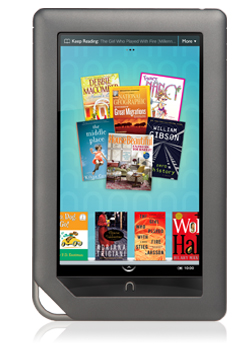
It seems there is only one formidable opponent competing on level ground with Amazon's Kindle and that is Barnes & Noble.

With the launch of their new ebook self-publishing venture, Pubit, in early October, the book store giant is finally on equally footing with Amazon.

Pubit was the last puzzle piece in the new paradigm of publishing that Barnes & Noble needed to take on Amazon with equal word power. (excuse the pun)

Both companies have control of the entire ebook publishing process from obtaining manuscripts to marketing, sales and distribution.
Here are the similarities:

Both companies have a huge inventory of books.
Both have years of experience selling books.
Both have comparable ebook readers with similar features and now both have self-publishing ventures. (Pubit and Kindle)

And the war is on. Check these other similarities between the two competitors as they try to one up each other.
Amazon pays its Kindle authors 70% of the list price if the price is $2.99 or more.
B&N pays its Pubit authors 65% of the list price if the price is between $2.99 and $9.99.

It is free to upload and publish your manuscript as an ebook on both Amazon and on Pubit.

Both companies have free, downloadable apps that will allow their ebooks to be read on other devices such as the iPad, iPhone, Android, PC and other mobile devices.

B&N claims they have more than 2 million NOOKbook titles.
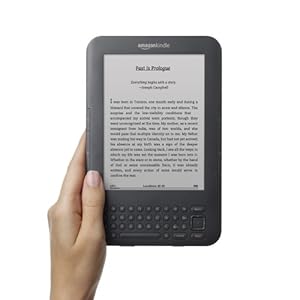
Amazon claims to have more than 725,000 Kindle titles.

Amazon lowered its Kindle price to $189 last year.
B&N lowered its NOOK price to $149.

Amazon produced a next generation Kindle that is thinner, has longer battery life and a crisper screen in a cool graphite shell.
B&N recently introduced a full color model in a graphite body with a full touchscreen.

So what's next?

More great ebook devices and apps at great prices and lower book prices.

Who will win? No one knows. Maybe both will.

For authors undecided about publishing on the Kindle or the NOOK, well, pick one or pick both. You will win either way. Both companies have an equally strong market share and different market segments.

After all, think of how boring life would be if there were only one car company, one computer company, one pizza shop, and only one big ebook retailer.


Enhanced by Zemanta

Monday, February 1, 2010

The Dark Side of the iPad


Steve Jobs has done it again. Wooed all of us with another Wow device with the introduction of the iPad last week, a new color ebook, email and web browser tablet that many critics say will go head to head with Amazon's Kindle.

And Kudos to Jobs for bringing another technological marvel to the market, but there is a darker side to the iPad.

With the launch of the new iBooks app for the iPad, five of the largest book publishers, Hachette Book Group, HarperCollins Publishers, Macmillan, Penguin and Simon & Schuster had signed up to provide e-book content for the new tablet.

And one of the major reasons they jumped on board so quickly is because the iPad gives them the opportunity to sell their books between $12.99 and $14.99 whereas Amazon limited their highest priced titles to $9.99.

The dark side to all of this is greed. These publishers are going against the natural laws of the market by forcing a higher price for ebooks on an already well accepted market price of $9.99.

One of the major reasons for the attractiveness of the Kindle is the $9.99 price for mainstream book titles. For the price of one hardcover book, a Kindle owner can have three major titles. I know many Kindle owners who have filled up their Kindles to capacity because of this low price and I know of others who easily spent upwards of $300 plus on Kindle titles.

These publishers are following the same path as the music industry – attempting to raise prices beyond what the market has deemed the comfortable price point. And they are using the same lame excuses – the publishers claim the low ebook prices are hurting hardcover sales; the music industry claimed the low price of downloadable songs cut into their CD sales.

Both are false. Many young people do not read books today preferring to get their content on video games, the Internet, ebook readers or on mobile devices. The older generations buy fewer books because of the high price of hardcover titles and wait for the paperback versions.

The trend is clear – sales of ebooks and electronic content are exploding; sales of print books are decreasing. This is the reality of the market, but the book publishers refuse to accept this.

Instead, they see an opportunity with the iPad to further preserve and hopefully bolster their failing business model – to give the booksellers as many printed titles as they want on consignment and allow them to return what they don't sell at no cost to the bookseller.

They believe the higher ebook price will cause people to buy the hardcover version. I don't think so. I believe they will only decrease sales of both versions. The $9.99 and lower price point will prevail.

The iPad pricing model is also bad news for mid list and back list authors because with the higher ebook prices only the major titles by the bestselling authors will sell, again closing the door to many unknown authors with good content.

If Amazon raises the prices of their books to be in line with these publishers, it will turn the ebook business model into the failing print book model – where publishers depend on bestsellers to support their businesses and publish fewer and fewer unknown authors.

And Jobs – he supports the higher ebook price because Apple will make 30 percent of each book sale on the iPad. The following from The New York Times on 1/27 sums it up:

"Mr. Jobs credited Amazon with pioneering the category with the Kindle, but said 'we are going to stand on their shoulders and go a little bit farther.'"

Remember that when you decide to purchase an iPad.

Reblog this post [with Zemanta]

Tuesday, June 16, 2009

Simon & Schuster Doomed to Failure in eBook Venture

By Anthony S. Policastro

Simon & Schuster will now sell its most popular titles as eBooks on Scribd.com. Great news! A major publishing house is going digital.

But they are doomed to failure.

They think readers will pay 20% off the list price of a book's most recent printed version, according to an article in The New York Times on June. 11.

So a printed Simon & Schuster title that lists for $26 will sell for $20.80 as an eBook and a $15 paperback's eBook version will sell for $12.00. Lots of luck Simon & Schuster. You would have better luck selling ice cubes on the North Pole.

Most people won't even pay $10 for an eBook. The reason is that they do not perceive the value the same as the printed version.

With a hardcover or paperback, you can feel and smell the value in the design of the cover, the layout of the type, the feel of the paper, and its ubquitious portability. You don't have to worry about a battery going dead or the sun being too bright to read the book.

An eBook has none of those characteristics and publishers will never convince the public, and they have tried, that eBooks cost as much to produce as their printed cousins.

In my last post, I asked the question, Would you pay $26 for an eBook? about Google competing with Amazon in the eBook market.

What stuck out in my mind was that publishers were embracing the move because they could charge what they wanted for eBooks on Google since they could not set prices on Amazon's Kindle. The article was updated a few days later with new information that Google will also set the price of eBooks similar to Amazon.

So Simon & Schuster, if the two largest forces on the Internet know that eBooks have to be priced much lower than their printed versions, why do you think a 20% discount will work?

Your new venture is doomed to fail unless you lower the price of your eBooks.

Here's my suggestion:

Price your major titles at $8.88 for the eBook version. The price is lower than Kindle's major titles and readers don't have to shell out $359 for the Kindle. In addition, three eights is traditionally lucky and fortunate and that luck and good fortune may come your way.

As long a major best sellers are priced on the Kindle at $9.99 and free and lower-priced eBook sites are popping up like weeds, why would anyone pay $20 for an eBook?

What do you think?


Reblog this post [with Zemanta]

Tuesday, February 17, 2009

Is the Kindle 2 Infringing on Writers' Rights?


By Anthony S. Policastro

Sometimes you just want to smack someone on the side of the head and say, “What sa madda wit you!”

This is how I feel about the Authors Guild claim that Amazon’s new Kindle 2 text to voice feature is infringing on writer’s audio book rights. (See the Wired blog by David Kravets.)

"Until this issue is worked out, Amazon may be undermining your audio market as it exploits your e-books," the guild told its members in a memo, according to Kavets.

Amazon responded with, "these are not audiobooks. Text to speech is simply software that runs on devices and reads content," according to a report in the Publishers Lunch newsletter.

Now would anybody in their right mind pay extra to hear a book read to them by a scratchy, robot-like synthesized voice as is the case with the new text to voice feature on the Kindle 2? NOT.

Audio books are rich, professionally created productions with great sounding voices, all the right intonations, flourishes of music and sound effects, and the ability to play them on any CD or MP3 player. These productions are well worth the money and the full protection of the US copyright laws.

The Authors Guild is acting like the greedy music industry executives who went to Gestapo-like tactics to prevent people from downloading free music by suing kids.

If the Authors Guild takes this issue further and some ill-informed judge rules in their favor, it will hurt writers mostly because their ebooks will cost more. And if anyone remembers marketing 101, the higher price will decrease sales and it will be a lose-lose situation for everyone.

Thursday, April 3, 2008

Amazon's BookSurge Decision a Harbinger?

Amazon recently announced that it will no longer list print-on-demand books unless they are printed through their own POD publisher, BookSurge. The decision has started an avalanche of shock and awe not only among POD publishers, but traditional publishers as well.
New York Literary Agent Richard Curtis and founder of E-Reads said it is a harbinger of book censorship.
He writes,
"While you're trembling, consider the possibility of a mega-retailer ultimately deciding what you read as well as how and where it's printed."
Pretty scary stuff. You can read the rest of the story on his blog, The Nine Gazillion Pound Gorilla Bares its Fangs.

And there's more. Read Mr. Curtis' follow up post, Direct Sales... about how publishers may deal with Amazon.