Saturday, April 25, 2009

Will eBooks Fail?

By Anthony S. Policastro

I was intrigued by Evan Schnittman's new blog Black Plastic Glasses and his post "Why ebooks must fail" because it contradicts what is happening all over the Internet - ebook sites are popping up like weeds.The miracle grow for ebooks is the launch of the second generation Kindle, the Stanza book reading application for the iPhone and ebooks being the preferred reading format of the younger generations who grew up on computers.

As print book sales have tanked in the past few years partly because young people don't read books anymore because they are on their cell phones, video games, and computers, the ebook has gained in popularity because it can be read on these devices. So what I see happening is an increase in ebook sales as print book sales dwindle.

I think Evan is right that ebook sales cannot sustain the publishing industry as a stand alone only book version and that will never happen because people - the market - will always want a printed book no matter what their age.But, I don't believe ebooks will fail - they will replace print book sales with real sales, not the virtual sales that publishers have used for the past 100 years. And I say virtual because the bookstores really hadn't purchased the book shipment until they write the check after their 90-day waiting to sell period is over. So the publisher really doesn't know the true sales number until the 90 days are up and as we know it's usually 50% of the original shipment.

So what I see is a paradigm market shift in the format of the content. The older, traditional book market prefers the printed page, while the younger book market prefers the digital version. If anything, the ebook will get the younger generations reading books again - something they do not do because the Internet, video games, and cell phones are more intriguing than the printed word.

I find myself on the computer more than I'm reading a printed book and usually have to remind myself to pick up that novel. I enjoy both digital and printed books.
Image representing Amazon Kindle as depicted i...
The challenge facing the publishing industry is to create a business model that will help sustain them in the eBook market. One way could be a combination of print and ebook offerings to capture each market segment. And the eBook segment may just work because its volumes and subsequently its profits will be higher than the print version market.

What do you think?
Reblog this post [with Zemanta]

Wednesday, April 15, 2009

Dark End of the Spectrum predicted Conficker Worm

When I finished my novel, DARK END OF THE SPECTRUM, I had created a plot involving an Internet worm using botnets that takes over the US power grid and cell phone network. And the worm is unstoppable.

In addition to providing entertainment, I hoped it would raise awareness to the possible threats that confronted the Internet and US infrastructure such as utilities, communications, and transportation. I still hope the book will do that.

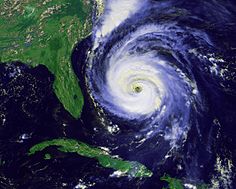
My idea for the plot was spawned after Hurricane Fran hit Wilmington, NC in 1996 and left us without power for three days. Then I realized how much we depend on electricity and take it for granted. Think about it - every appliance in your home is useless without electricity. Most people have experienced a blackout for only a few hours, but when it turns into days, it really hits home how critical electricity is in our everyday lives.

I then imagined that if hackers could control the power grid and where electricity is sent it could be a disaster and this is what helped me create Dark End of the Spectrum.

And now in the past few weeks, the Conficker Worm is The Dark End of the Spectrum coming true. The worm is unstoppable. It uses an army of botnets to infect computers and complete its mission(s) and it's purpose is to steal credit card numbers.

What if its creators programmed it to take over the power grid or cell phone network? Would the government and all the computer security organizations be able to stop it?

I predict that the Conficker Worm is just the tip of the iceberg and I see more harmful and more disastrous events happening with the Conficker Worm and its predescessors unless the government, organizations, and corporations heed the warnings of the security professionals and beef up their online security.

Want to know more. Take a look at my press release for more on my statement at PRLOG or download a copy of DARK END OF THE SPECTRUM.


Press Release
Raleigh Novelist and Hacker Researcher says worse to come by Conficker Worm and Other Cyber Threats

HTML Version
PDF Version

Sources for the press release:

CNN - http://www.cnn.com/2009/TECH/04/01/tech.viruses/index.html
The New York Times - http://www.nytimes.com/reuters/2009/04/01/technology/tech-us-security-virus.html?_r=1&hpw
The Wall Street Journal - http://online.wsj.com/article/SB123914805204099085.html#articleTabs%3Darticlarticle/SB123914805204099085.html#articleTabs%3Darticl

Additional resources:

ZDNet - http://blogs.zdnet.com/security/?p=3110&tag=nl.e550
ZDNet on the power grid infiltration - http://blogs.zdnet.com/BTL/?p=16001&tag=nl.e539
Scientific American - http://www.sciam.com/blog/60-second-science/post.cfm?id=spies-hack-us-electricity-grid-2009-04-09

Hurricane Fran photo courtesy of Wikipedia
Reblog this post [with Zemanta]

Tuesday, March 24, 2009

"Write a Page a Day or You're Not Serious"


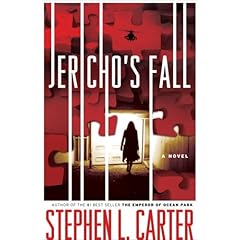
My wife and I attended the Virginia Festival of the Book in Charlottesville this past weekend, and one of the highlights was hearing native son, John Grisham participate in a panel discussion with Stephen L. Carter.

Both are prolific writers, John Grisham with twenty two novels published and Stephen L. Carter, a William Nelson Cromwell Professor of Law at Yale Law School with nine novels and six books on policy.

During the discussion, moderated by Dahlia Lithwick, there was some valuable advice I garnered from both writers about writing and about being an author.

John Grisham said he never planned to be a writer - his dream was to become a great trial lawyer. He said he started "playing around" with writing fiction later when he was around 35 or so and found it was "fun" and "really gratifying."

His first book, A Time to Kill, had a print run of 5,000 copies of which, "I bought a thousand."
He wrote a second book and that would be the acid test - if it sold well he would continue as a writer; if not, he would continue as a lawyer. "Besides, I was not happy being a small town lawyer and starving." The second book, The Firm, sold well and later became a blockbuster movie.

When he had reached best seller status with the book, his friend, horror writer Stephen King, called him and said, "'Welcome to the big leagues.' That was nice I thought. And then he said if you want to stay on top you have to do a novel a year so that's what I have done."

Stephen L. Carter is so well known in law circles that he has a Wikipedia entry. He said when he started his career there were maybe two college professors who wrote fiction. Now, he said he is seeing a lot more writing fiction as well as professional journals and books.

He said "writing fiction fills a need in my soul and it is fun to do. If you want to be a writer, it has to be a job. You have to make yourself do it."

John Grisham agrees. "Write a page a day or you're not serious."

Click here to hear the entire one hour panel discussion at the VA Festival of the Book site.
Reblog this post [with Zemanta]

Thursday, March 19, 2009

What’s a Hook? The Art of the Pitch

New York Times Bestselling mystery/thriller author Joe Finder was gracious enough to let us reprint his blog post here on the art of the pitch.

By Joseph Finder

This is the text of my March Writing Tips newsletter, which just went out. If you'd like to subscribe, you can do so here.

My Hollywood agent brought me out to L.A. not long ago to pitch a couple of Big Shot TV producers on an idea for a show they wanted me to create. I figured, why not? I flew out there and got into the meeting with Big Shot Producer #1, wearing my expensive jeans, and started telling him about my idea, the same way I’d tell my editor or my agent.

About five minutes into my spiel he cut me off and said, “Excuse me. No offense, but you’ve never pitched before, have you?”

I confessed I hadn’t, as if I had to say anything. I don’t pitch. I write.

He said, “I can tell. That’s not how you do it. Why don’t you come back in after you meet with the other producers and pitch it again?”

You might think that I’d be embarrassed or annoyed, but the truth is, I appreciated his honesty and respected the guy all the more for it.

Pitching is a specialized skill that has very little to do with whether you can write. But in Hollywood, the pitch is the currency. If you can’t pitch your idea, no one’s buying.

Why should novelists care about the art of the pitch in Hollywood? Because being able to pitch a movie, or a TV show, is the same skill as being able to come up with the “hook,” the “what-if,” the premise of that novel you’re writing. Or that script.

Put it another way: you’re in an elevator with one of the most powerful book agents in New York (or wherever), and you have ten seconds to pitch your novel to her so that she’ll actually want to read it. Can you do it?

Bet you can’t.

Maybe you’re thinking, “Who cares? I’m not going to ever get into an elevator with a powerful agent, and if I did, I’d probably freeze up anyway.” Maybe. But odds are, at some point you will have to e-mail or snail-mail a pitch in the form of a letter or a note.

“So what’s it about?” a friend asks you. You say, um, er, well . . .

Summarizing your story in a sentence or two is one of the hardest things to do, whether you’ve published ten books or none. Don’t forget, we established writers have to pitch our books too, when we’re interviewed on TV or radio. It’s not easy. But it’s essential, and not just to sell a book. I’m convinced that if you can’t “pitch” it in a sentence, you don’t have the story figured out yet. Simple as that.

Years ago, when I was struggling through the first draft of The Moscow Club, I had lunch with an editor. “What’s your ‘What If?’” he asked.

I had no idea. My “What If”? I’d never thought in those terms. But he was right; every book starts with a question that, in the end, it answers. Call it a Hook, call it a donnée, call it a premise. It’s the thing that sucks the reader in and makes him or her want to know what happens next.

Now, a confession: I’ve been writing thrillers for over 20 years, and I still get confused about the difference between a “hook” and a premise. Is a hook the thing that starts the book and grabs you by the lapel and makes you want keep reading? Or is it the concept of the entire book — a definition that veers dangerously into the Hollywood notion of “high concept”?

I’ve done some thinking, and here’s my answer. “High concept” is an unjustly maligned term meaning a story idea that can be easily grasped both by studio execs and by audiences. But a warning: just because you can pitch it in a sentence doesn’t make it High Concept. No — it has to be extremely appealing and commercial, not just succinct. It’s got to have wide, instant commercial appeal.

Yet if a story is all high concept with no follow-through, it’s little more than a gimmick. Take “Snakes On a Plane” — you get what it’s about instantly. You may even want to watch it. But it’s not a good movie. It’s all wind-up, little delivery.

Don’t get me wrong; there’s nothing wrong with a “high concept” thriller. In fact, if you have a high concept, that makes it even easier to sell. Take The Bourne Identity, for example. What if a man with amnesia has forgotten he’s the world’s most dangerous assassin? That concept boosted Bob Ludlum’s already large readership hugely, based on the premise alone. And it’s a great one. A couple more great high-concept thrillers: Michael Crichton’s Jurassic Park: “What if scientists could clone dinosaurs from prehistoric mosquito blood trapped in amber?” Or John Grisham’s The Firm: “What if a high-end law firm turned out to be a Mafia front?

High concept isn’t necessarily cheesy at all — Shakespeare’s Romeo and Juliet, anyone? It’s all about how well it’s executed. Scott Turow’s Presumed Innocent (prosecutor is accused of the murder of his lover, and he’s the first-person narrator) is high-concept to be sure, but beautifully written and brilliantly plotted.

A hook, on the other hand, is the opening gambit that reels you in -- like a fish-hook. Harlan Coben is a master of the hook. (Dan Brown says so.) Tell No One, for instance — a guy gets an e-mail message from his dead girlfriend, who may or may not be dead. I’m there. The book spirals on from there, but that’s the set-up, the premise that grabs you at the outset.

A fishing hook needs bait and a fisherman, though, and a writing hook needs a story. An unusual situation, however intriguing, is not a story. “A family digs a swimming pool in the backyard, and finds a buried time capsule” is a great premise for a novel – but what happens next? “A family’s discovery of a time capsule buried in their backyard makes them the targets of government agents from every country in the world” — that’s a story hook, because now we know that the time capsule sets a chain of events in motion. (Hey, I just made that up, but I like it!)

So, the moral of the story: if you have a high concept for a novel, great. But you don’t need one. At the very least you want a great “what if,” a hook that grabs the reader in the beginning and makes him or her want to keep reading.

In any case, you do want your story to have a simple, easily expressible premise, and until you know how to articulate it, the odds are you haven’t figured it out yourself.
Reblog this post [with Zemanta]

Sunday, March 15, 2009

The Dog is Chasing Ghosts

I started a new blog about what every author should know about online marketing and then some called THE DOG IS CHASING GHOSTS. Take a look. I think you will find it entertaining and useful.

Every so often, our labradoodle, Nickie, will confidently stare into a corner of a room with no windows and bark repeately for several minutes."What is the dog barking at?" my wife would ask.

"Ghosts. I think the dog is chasing ghosts." I say.

She raises her eyebrows and her face says, "maybe," and the dog stops barking and we go about doing whatever it was we were doing.

Whether my dog is barking at ghosts or not, something is there, something triggered the keen senses of the my pet whether it was a sound, a smell or a noise.

The Internet is similar in that of all the millions of users out there, you can't see them or touch them, but you know they are there.

Anthony S. Policastro, The Dog is Chasing Ghosts, Mar 2009

Saturday, March 7, 2009

Have You Ever Read an Ebook?

Now's your chance.

With the explosion of ebooks and electronic book readers, Read an E-Book kicks off the international literary event Read an Ebook Week (http://www.ebookweek.com) this Sunday (March 8) to raise awareness of ebook reading.


During the week-long event, ebook authors around the world will offer their ebooks at deep discounts, or even free, to generate excitement about ebooks.


Read an E-Book Week is a not-for-profit week set aside to inform the public about the pleasures and advantages of reading electronically.


Authors, publishers, vendors, the media and readers world-wide have joined the effort and promote ebooks. The organization welcomes anyone to help in this worthy event. For more information on how you can help visit their website at http://www.ebookweek.com/ebook_promotions.html


And by the way, both of my mystery thrillers, ABSENCE OF FAITH and DARK END OF THE SPECTRUM are FREE this week to support ebook week. Click here for your free download(s).

Reblog this post [with Zemanta]

Thursday, February 19, 2009

Post Your Book on the Kindle, but Make Sure You Promote It

By Anthony S. Policastro


If you have written a book, you can now post it on Amazon's Kindle eBook reader for free. A simple four-step process is all it takes and within 12 to 72 hours your book will be on the Kindle right next to James Patterson, John Grisham, and other literary luminaries.


Amazon's Digital Text Platform allows anyone to post a book if you have never published before with or without an ISBN number. Amazon will assign your book its own tracking number called an ASIN number.


The best part of listing your book with the Kindle is that you are free to set your own price and Amazon will give you 35 percent of your sale price even if they discount the price on their site. I listed my thriller, Dark End of the Spectrum, for $5.99 and Amazon discounted it to $4.79. Amazon will still pay me 35 percent of the $5.99.


The other great feature is that your book can be found globally on Amazon.com. Just put in your name or title in the search field and your book will come up just as if you searched for Nicholas Sparks or War and Peace.


While Amazon has not released the number of Kindle owners, another advantage to listing is that people who purchased the $359 Kindle are avid readers so you have a devoted, captive audience. But don't get excited yet, the hard part is promoting your book.

With more than 240,000 titles on the Kindle and growing every hour, your book might as well be a grain of sand on the California coast. The Kindle does not list new releases as a separate category and ranks books by their sales on Kindle. When you go to the book list the current best sellers come up first. I listed my book in the suspense and thrillers category and soon learned my title was among 2,420 listed there. The other disadvantage is that you cannot go to the last page of the listing on the Kindle nor can you see titles listed by publication date.


You can search Kindle books on Amazon.com by category, price, publication date, customer reviews and bestsellers, but you will not find your book easily. I searched my title by category and publication date – the most common search metrics among readers looking for a new book and found the dates out of sequence and a large number of advanced releases in front of my publication date.


The other search method is by the search tags you assign your book, but this too is daunting since the search will pull up thousands of titles with the same tags. The best thing to do is put your name in as a search tag. This will filter out just your books.


Despite these drawbacks, it is better to list your book on the Kindle format. I've had some sales with little or not promotion. So get the word out.

Tuesday, February 17, 2009

Is the Kindle 2 Infringing on Writers' Rights?


By Anthony S. Policastro

Sometimes you just want to smack someone on the side of the head and say, “What sa madda wit you!”

This is how I feel about the Authors Guild claim that Amazon’s new Kindle 2 text to voice feature is infringing on writer’s audio book rights. (See the Wired blog by David Kravets.)

"Until this issue is worked out, Amazon may be undermining your audio market as it exploits your e-books," the guild told its members in a memo, according to Kavets.

Amazon responded with, "these are not audiobooks. Text to speech is simply software that runs on devices and reads content," according to a report in the Publishers Lunch newsletter.

Now would anybody in their right mind pay extra to hear a book read to them by a scratchy, robot-like synthesized voice as is the case with the new text to voice feature on the Kindle 2? NOT.

Audio books are rich, professionally created productions with great sounding voices, all the right intonations, flourishes of music and sound effects, and the ability to play them on any CD or MP3 player. These productions are well worth the money and the full protection of the US copyright laws.

The Authors Guild is acting like the greedy music industry executives who went to Gestapo-like tactics to prevent people from downloading free music by suing kids.

If the Authors Guild takes this issue further and some ill-informed judge rules in their favor, it will hurt writers mostly because their ebooks will cost more. And if anyone remembers marketing 101, the higher price will decrease sales and it will be a lose-lose situation for everyone.

Monday, February 2, 2009

So You Think You Can Write a Book?

By Anthony S. Policastro

The Jenkins Group, an independent publishing services company, says four out of five people they surveyed said they believe they have a book to write. Even fewer actually sit down and write a book and even fewer get published. Many established literary agencies in New York and elsewhere get upwards of 500-email and snail mail book queries a week and less than one percent of them are considered for representation.

So how do you get published with those odds?

It is easier than ever to get into print with the magic of print on demand and do-it-yourself publishing web sites like Lulu.com, Lulu is one of the few sites where it is free to upload your manuscript, design your cover or pick a pre-designed one and publish your book complete with an ISBN number and distribution on Amazon.com. There is no minimum number of copies to purchase, no hidden, we gotcha fees, and no secrets about how much you will make on each sale, what Lulu makes and what print and distribution costs amount to for your book. You keep all your rights and you set the price and the royalty.

A recent article in The New York Times reported, “In 2008, nearly 480,000 books were published or distributed in the United States, up from close to 375,000 in 2007, according to the industry tracker Bowker. The company attributed a significant proportion of that rise to an increase in the number of print-on-demand books.”

So what are you waiting for? Change your odds of getting in print. Go to one of the self-publishing online sites and publish your work! What? You’ve done that already? Okay, now comes the hard part - the marketing and promotion of your work.

If you wanted to sell homemade jewelry on the web, you would put up a web site complete with a storefront and check out cart and sit back and hope one hundred or more orders a day came your way. Now, would they? Most likely not. You have to promote your site, its market advantages like price, quality, brand, and ensure you are reaching people who are interested in buying homemade jewelry.

It’s the same when publishing a book. If you write a romance novel or a technical manual on how to tune the engine of a 737 you have to reach the right market with your message. One of the great advantages to using Lulu is that you can choose between doing everything yourself or buying the marketing services of publishing professionals from Lulu.

Here a few cool tricks I use to market my Lulu books . And they are free. Go to Google Blog Search and search for blogs pertaining to the subject area of your book. When you find some, read a few posts and leave a comment with a link to your book on Lulu or to your web site. This takes time and you must leave a comment with some substance for it to work. But if you hit the right blog with the right audience, it’s like winning on a slot machine in Atlantic City. One post increased traffic to my site by six times in one day! You can also do a search on Google, but you will get mostly web sites and often you cannot leave a comment.

Offer a free download of your book for a limited time. After all, if someone is willing to read your entire book on a computer screen they must be pretty interested in your work. What usually happens is if they like your book enough, they will purchase the print copy out of convenience since it is easier to read a book in print than on a computer display. This is also helpful when you send out press releases – you can direct the media to download your book for review. This is the preferred method of distributing your electronic version to the press and reviewers. If you attach a copy to an email, press people most likely will not open it for fear it may contain a computer virus or Trojan horse.

By the same token, send emails with links to your book to people involved in your book’s subject matter and ask them to review your work and write a short review. Mention that you can include their comments in your book if they want.

If you want to market your book as an eBook check out Smashwords. It’s free to upload your book and you make 85% of the price you set. The most significant advantage of Smashwords is that the site automatically converts your manuscript into ten different electronic formats so that your book can be read on a standard PC, iPhone, Kindle, Sony Reader or Palm Pilot. Readers can also view your work directly on the site using a web browser or standard word processor.

If you have never written a press release, Lulu offers an excellent template that walks you through the process so you can produce a professional release that the press will read and hopefully follow up with you. I used to be a journalist and it was nearly impossible to read every piece of mail that came into the office. But a professionally written press release always managed to get read.

And if you want to write your next book rather than market your current one, you can easily purchase Lulu’s many marketing and distribution services created and offered by professionals in the publishing business.

If you are considering self-publishing, my good friend and colleague Henry Hutton just started publishandsell.com, a supermarket of author services that will greatly help you navigate through the complex world of self-publishing. He is also one of the founding members of Lulu.com and extremely knowledgeable about the industry.

Just keep in mind you are the best sales person for your work – you are closest to the content and you are passionate about what you wrote or you would not have made the effort to create a book.
Share/Save/Bookmark
Reblog this post [with Zemanta]

Friday, December 26, 2008

The Gift of Giving and Gratitude

By Anthony S. Policastro

At sixteen I knew I wanted to be a novelist. But when I sat down to start my book, the page remained blank. Writer's block at sixteen? Hardly. My pages remained blank for another dozen years or so, but my dream stayed with me. Then one day I was able to type "The End" on a page and I knew I accomplished the first step of my dream.

Years later I realized that when I tried to write a novel at sixteen, I had not experienced enough of life to form an opinion, a viewpoint, a voice. I needed to live life more, experience all of its intricacies and continually search for my voice. Maybe, this is what they call maturity. Maturity as a person, maturity as a writer.

That revelation stayed with me and is still with me and I am always open to trying new things, going to new places, meeting new people. Don't get me wrong, you don't have to climb Mount Everest or ride in a gondola in Venice to effectively write about those experiences – there is plenty of information in books and on the Internet to allow you to virtually experience them. You just have write so your readers can experience whatever comes out of your imagination.

So when my wife suggested that we volunteer our time at the Helping Hand Mission here in Raleigh on Christmas Eve to help distribute food and toys to the less fortunate, I was thrilled. Not only because it would be a new experience, but mostly because we would really be helping people less fortunate than us. And here's another important epiphany of life…perspective. You really get a reality check on your life when you see others who have much less than you. You become very grateful for what you have and you feel lucky. (You can experience a bit of what we did by viewing my photo stream on Flickr.)

It's the same with writing. When you constantly compare your writing to luminaries like Sara Gruen (Water for Elephants) or Jodi Picoult, who writes fiction about real issues that are pertinent today, you think your work is substandard because it doesn't sell and you are not a full time writer. Well, you should never imitate any writer; you should be your own writer. Yes, always shoot for the stars, but don't be undaunted by the success of others. And when you find your true voice, you should be grateful because many writers never find it. You should feel lucky and grateful like I did on Christmas Eve when I handed boxes of food and a turkey to fellow human beings who had a lot less than most of us.

Reblog this post [with Zemanta]

Thursday, December 25, 2008

Wednesday, December 24, 2008

It Really is a Wonderful Life

Now that it is Christmas Eve,

I thought I would re-post my piece on the classic film "It's a Wonderful Life" from last year. The film aired on NBC TV Saturday night (12/13/2008) and you guessed it my wife and I watched it and enjoyed the airing all over again.Anthony S. Policastro

In light of the current US economic situation, the film is a testament to the dire consequences of greed.

Reblog this post [with Zemanta]

Monday, December 15, 2008

It Really is a Wonderful Life

By Anthony S. Policastro

I thought I would re-post my piece on the classic film "It's a Wonderful Life" from last year. The film aired on NBC TV Saturday night (12/13/2008) and you guessed it my wife and I watched it and enjoyed the airing all over again.

In light of the current US economic situation, the film is a testament to the dire consequences of greed.


My wife and I were watching Frank Capra’s “It’s a Wonderful Life” on NBC the other night for the 100th time or so. We both have seen the movie so many times we can recite the actor’s lines as they say them. We watch it every year just as we put up a Christmas tree every year. Although we have seen the movie many times, we both thoroughly enjoy watching it again often saying, “This is one of my favorite scenes,” or “I can’t wait to see this part.”

I started thinking about this film and why it is still popular and why it is so timeless. After all, the film debuted in movie theaters on December 20, 1946, it is in black and white and the lifestyle and mores of the era are those of our parents and grandparents depending how old you are. Some of the actors and scenes are corny by today’s standards, but the film remains highly popular. In addition, it was considered a box office flop because it did not generate the anticipated revenue.
As I watched it I could see that the film was made like a well written novel. Great characterizations, conflict, drama and George Bailey’s (played by Jimmy Stewart) self realization that his problems were nothing compared to all the things he had done and all the people his life had touched. All the plot points are resolved in the end and two major themes emerge: self sacrifice to help others and that family and friends are all that matter.
This is the stuff of great novels like GONE WITH THE WIND, THE OLD MAN AND THE SEA and others that speak a universal human truth that lives on through each generation. A truth that is not anchored in time and relevant to the values of any era. This is the kind of story telling all writers would love to write and it is the universal thread that keeps us writing against all odds.
If you have never watched “It’s a Wonderful Life” it is one of those films that should be required watching to become a member of the human race. It’s a film you should watch if you are writing a novel because it has all the elements of great story telling.
Here are links to additional information on the film.
A great review by Tom Dirks on filmsite.org
Photos and videos on The Internet Movie Database
Photos and information at Reel Classics

Reblog this post [with Zemanta]

It Really is a Wonderful Life

By Anthony S. Policastro

I thought I would re-post my piece on the classic film "It's a Wonderful Life" from last year. The film aired on NBC TV Saturday night (12/13/2008) and you guessed it my wife and I watched it and enjoyed the airing all over again.

In light of the current US economic situation, the film is a testament to the dire consequences of greed.


My wife and I were watching Frank Capra’s “It’s a Wonderful Life” on NBC the other night for the 100th time or so. We both have seen the movie so many times we can recite the actor’s lines as they say them. We watch it every year just as we put up a Christmas tree every year. Although we have seen the movie many times, we both thoroughly enjoy watching it again often saying, “This is one of my favorite scenes,” or “I can’t wait to see this part.”

I started thinking about this film and why it is still popular and why it is so timeless. After all, the film debuted in movie theaters on December 20, 1946, it is in black and white and the lifestyle and mores of the era are those of our parents and grandparents depending how old you are. Some of the actors and scenes are corny by today’s standards, but the film remains highly popular. In addition, it was considered a box office flop because it did not generate the anticipated revenue.
As I watched it I could see that the film was made like a well written novel. Great characterizations, conflict, drama and George Bailey’s (played by Jimmy Stewart) self realization that his problems were nothing compared to all the things he had done and all the people his life had touched. All the plot points are resolved in the end and two major themes emerge: self sacrifice to help others and that family and friends are all that matter.
This is the stuff of great novels like GONE WITH THE WIND, THE OLD MAN AND THE SEA and others that speak a universal human truth that lives on through each generation. A truth that is not anchored in time and relevant to the values of any era. This is the kind of story telling all writers would love to write and it is the universal thread that keeps us writing against all odds.
If you have never watched “It’s a Wonderful Life” it is one of those films that should be required watching to become a member of the human race. It’s a film you should watch if you are writing a novel because it has all the elements of great story telling.
Here are links to additional information on the film.
A great review by Tom Dirks on filmsite.org
Photos and videos on The Internet Movie Database
Photos and information at Reel Classics

Reblog this post [with Zemanta]

Wednesday, November 12, 2008

For All Writers - There is Hope

I highly recommend reading my post on authors who self published:

With all the doom and gloom with the economy and Wall Street, I wanted to share some light and hope with all the struggling writers out there who dream of becoming a published author one day.Anthony S. Policastro, The Writer's Edge, Nov 2008

Reblog this post [with Zemanta]

Tuesday, October 28, 2008

Someone was Playing with my Head


I awoke to something tickling my nose. When I scratched it, I snagged a da
ddy long legs spider crawling on my face. I instantly swatted it away and jerked up to a sitting position. The vertigo was next and the snow white clouds swirled in the crystal blue Carolina sky as if they were in a giant mixer. I still had the neural bracelet on (See The Neural Bracelet for more on that). Actually, I couldn't get it off – it seemed like it was crazy-glued to my wrist. My head had that empty feeling like an echo chamber.

The hollowness was suddenly filled with a voice that seemed to be nowhere, but everywhere.

"Just think about what you want to say," the voice said.

"Huh? Who is this? Where are you?" I thought.

"Jake Stone. Just think of something!"

I wondered if I were dead. They have mental telepathy in heaven, right?

"You're not dead. Now get up and walk to the front of your house. I want to see if buildings interfere with the transmissions."

"You heard that!"

"All you have to do is think of something and your thought gets transmitted to me."

"What are you talking about?"

"The bracelet is a communications device connected to your nervous system and directly connected to your brain."

"I did die or this is a some crazy dream."

"It's not a dream. Now go to the front of your house. Just do it."

As I walked, I could feel the grass swat my sneakers so I made a mental note to cut the grass over the weekend.

"You're going to cut your grass over the weekend. You just decided you would," Jake said.

"This is getting really scary. How do I get the damn thing off?"

"Tap it twice and it will release."

As I approached the driveway that ran along the side of the house, I caught something in the corner of my eye. It was black and veered out into full view – a para-military type dressed in black and holding an Uzi with a long barrel. With my brain already on red alert, I instantly darted back into the woods behind my house. I could hear things swishing past me and then a basketball-sized hole blew out of an old oak tree in front of me. Pieces of hot bark hit me in the face.

"Run! Run! We've got you covered!" Jake echoed in my head.

"Bull!" I thought.

This was my land and I knew every nook and cranny of the 1.4-acre lot. I headed for a hollow, fallen oak tree large enough to crawl into, but then I thought, it would be the first place he would look.

"Head for the highway! The tree is a coffin," Jake said.

"Damn!"

I ran to a thicker part of the woods that would lead to the highway and give me additional cover. The only problem was the thorn bushes were slicing my hands and arms as I plowed through the underbrush. I looked back and he was closer. I ran faster and looked back again, but when I turned I saw a tree coming at me. I slammed into the trunk; the pain was excruciating. I felt myself falling and then there was nothing. I opened my eyes and everything was blurry. I was laying in a small gulley on a bed of rotting black leaves. The pain in my head intensified when I saw him standing over me.

"Jerk! What are you running from?" The voice was faintly familiar.

He pealed off the black ski mask and went for the Uzi. I'm dead, I thought. This is it. My whole life flashed in front of me like a never ending slide show.

"Oh my…you idiot!" I shouted. "What are you doing dressed like that?"
"I wanted to show you my cool Halloween costume I got at the thrift shop." It was my friend and neighbor, Dennis, who often plays practical jokes on any unsuspecting victim. "I got this new paint ball gun, too." He brandished it like it was a trophy.

"You were shooting me with that?" I said. I touched my face and my fingers turned red from the paint ball that hit the tree earlier.

"I wanted to test it."

"You're such an idiot!" I shook my head and looked down at my wrist. The neural bracelet was gone.

"Hey. Help me look for a silver watchband I think I lost. I just had it. It must be around here somewhere."

We looked all around the area and even back-tracked where I had been, but never found the bracelet.

Reblog this post [with Zemanta]

Thursday, October 16, 2008

The Neural Bracelet

I decided to work from home today because of my near death experience the previous night. (See my earlier post, "I Just Sat There…Stunned" for that adventure.

Later in the afternoon I went out to the mailbox and pulled a pile of mail out. Heading back into the house, I noticed a sealed envelope by the front door. "What now?" I thought. I knew instantly who it was from – the envelope was blank so it had to be from Jake Stone, the covert operative who has been feeding me sensitive, classified information for this blog after reading my thriller, Dark End of the Spectrum. So he claims.

I was about to pick it up when I thought it could be laced with anthrax or some other deadly substance. I went into the garage and put on a pair of workers gloves and proceeded to pick up the envelope. It was thin so I immediately ruled out a bomb, but still. I went back into the garage and put on a facemask I use when I paint rooms. I slowly opened the envelope holding it as far away as possible. It held a single piece of cream-colored paper and I could tell most of it was blank. I opened the page and lettering instantly appeared.

"Check the fourth rock in the back." It said and within seconds the lettering faded away. It was from Jake Stone. He had sent me an earlier note that also faded. (See the Starbucks Caper) This is the 2008 version of Mission Impossible, but he's no Mr. Phelps.

I walked to the back of my house to where I have several stepping stones sloping downward with the grade of the land. I stopped at the fourth stone. It didn't look disturbed, but I wasn't taking any chances. I picked up a rake near the tool shed and went back. I carefully placed the tines of the rake under the edge of the stone and lifted. At the same time I ran towards the house in case there was bomb. Nothing happened and I hoped none of the neighbors were watching. I slowly approached and looked at the indented earth where the rock had been and saw something shiny. It was an anti-static bag – a gray silver metallic bag used to protect electronic components from static electricity and X-rays. The bomb was in there, I thought. Then again why tell me where it is. Was I being too paranoid? I opened the bag and spilled out the contents. A flexible silver watchband bounced onto the brown earth except it didn't have a watch. A small sticky note on the band said, "Try it."

Ok, was I dumb enough to slip it on? Was it the neural bracelet Jake had mentioned in his earlier note that connects directly to your brain through your nervous system? I was too curious to let it go. It would gnaw at me. I slipped the bracelet on. Nothing happened. I'm thinking who buries a sophisticated piece of electronics under a rock in my back yard? Was I really expecting something to happen? I suddenly felt like I was being watched. Worse yet, my thoughts were more vivid – they echoed in my head and I thought I was floating. Everything around me, the trees, the plants, the grass appeared virtual like they were a passing thought. My thoughts took on more significance. And then it struck – a white noise that took the color out of everything with the fury and sounds of a hurricane. What was once my colorful reality turned into a white liquid swirl that slowly numbed all my nerves. The last thing I remembered was someone calling my name.

Reblog this post [with Zemanta]

Thursday, October 2, 2008

I Just Sat There…Stunned

I just sat in my car trying to clear the fog out of my mind when my cell buzzed and danced in the cup holder where I forgot it before entering the Japanese restaurant. (See my last post, Drugged, Kidnapped and Left to Ponder my Fate about that harrowing episode.) I knew instantly who it was from the familiar ring and photo displayed.

"I'm so glad to hear from you," I said to my wife.

"Where are you? I called the police and they are ready to file a missing person's report!" Wow, I didn't realize how loud my phone could be. I tried to turn down the call volume, but I couldn't remember where the buttons were located.

"I'm sorry, but they put something in my beer and I passed out. Then they took me to some dilapidated farmhouse where there was a gun fight…

"Are you drunk? Are you having an affair?"

"No! No! Are you nuts?"

"I can't imagine why it took so long to meet a guy about your book, who you've never met, never seen and who sounds really dangerous…people disappear all the time…you should have called…" I could hear the tears falling in the background.

"I'm fine. I'm fine." I let out a deep breath. "I'll be home in few minutes. I didn't have my phone; everything happened so fast. I'll be right home."

"Okay." I could barely hear her, but I heard her pain.

I started to drive out of the parking lot and the phone came to life again. There was no caller ID.

"Hello."

"You're lucky to be alive," the voice said. "Now you can work with us and stay alive or take your chances with them."

"I'm not dealing with this bullshit!" And I hung up.

As I drove home I noticed a car that I thought was following me, but then again maybe I was being a little too paranoid.

Reblog this post [with Zemanta]

Wednesday, September 24, 2008

Drugged, Kidnapped, and Left to Ponder my Fate

The next thing I remembered was being violently pushed forward and the tightening of the seat belt on my shoulder and chest. My head hurt and I'm thinking how I could have a hangover on one beer. I had a hard time focusing on any thoughts. In my last post, Is Jake Stone a Hoax? I passed out in a Japanese restaurant and now I suspect there was something in the beer. The last thing I remembered was a Japanese businessman rushing towards me and then everything went black.

I looked around and the blackness of the night surrounded everything except for a faint yellow bug light about 100 yards away burning on the front porch of a small house. Suddenly, the blackness seemed to escape out the driver's side door as the dome lights sprayed the inside of the car.

"Let's go," said a clean shaven, military type guy dressed in black. He grabbed my arm and helped me out.

"Who are you? Where am I?" I managed to get out through the fog in my mind. The man ignored me.

As we approached the house, the bug light revealed that it leaned to the right. Now, I'm a lot more alert as I feel the adrenalin seep through my body.

"It is safe to go inside?" I said assessing my options to make a run for it.

"As safe as it will be," the man in black said.

We walked up three creaky steps to a small front porch with a gabled roof. The multiple coats of white paint curled away from two narrow pillars that supported the roof. The military type knocked on the door five times and five more knocks came from the other side.

The door opened and a thirty-something man with a crew cut appeared wearing a black flack jacket and a shoulder holster with a 9mm tucked inside. The two nodded.

The house smelled musty and the floor moaned as we walked through the narrow kitchen into a small, dark hallway that opened into a small living room. A single lamp with a dented black shade dimly lit a brown, worn sofa with a large jagged hole in the middle backrest. A robust man with deep wrinkles and lines in his face sat on the end of the sofa next to the table lamp. His eyes were in shadow.

"Sit down," the man said in a raspy, crackling voice. The military type next to me pointed to a worn and smelly recliner facing the sofa. I sunk so low that my butt touched the floor and I instinctively gripped the armrests. The man in shadow smiled slightly.

"I'm Jake Stone," the man in shadow said.

"How do I know?"

"I left you a Starbucks gift card with information that faded away within three minutes," he said.

(See my post, The Starbucks Caper – Is This for Real? about that incident.)

"About a cyber terrorist plot to take over the cell phone network and the power grid. The barista gave you the gift card with the information."

"Okay, so you are real?"

"Your book..."

"Dark End of the Spectrum?"

"…is too accurate."

"It's fiction."

"Where did you get the information?"

"I made it up."

"Some of it's true. You must have a connection."

"I don't know what you're talking about. I wrote a book and that's it!"

Jake Stone took a sip from a tumbler on the end table.

"You know a lot of people pawn off the truth as fiction."

"Oh, really?"

"This could get dangerous. You sure you want to continue running my information?"

"How dangerous?"

"Your family."

"I'm not convinced. I don't even know if people are reading it. I don't get much traffic."

"You will and then things could change."

"I'll deal with it."

"You won't be able to once it starts."

"You sound like you don't me to run your stuff."

"I just want you to know what you're getting into." He took another sip from the tumbler.

"Okay, fair enough."

He got up and extended his hand. I took it and we shook.

"Thanks," he said revealing his cold steel blue gray eyes. They made me shiver.

The two military types appeared behind me like unpleasant shadows. We headed for the kitchen, but never made it – two booms erupted so loud they seemed to stop time momentarily. The military types slammed me down and I hit the floor hard. I thought the house exploded. The gunfire shattered the windows in the living room and destroyed most of the wall. We crawled into the kitchen and one of the guys in black went out. I heard others join him and then we rushed into the black SUV parked close to the house. Another military type jumped in and the driver hit the gas hard. We took off down a dirt driveway and skidded onto a paved road nearly toppling the SUV. The guy next to me grabbed my face and held his hand over my mouth and nose and I thought this was the end. Everything vanished. I woke up in my car in the mall parking lot where I left it to go to the Japanese restaurant. It was three am and my head pounded in pain.

Reblog this post [with Zemanta]